

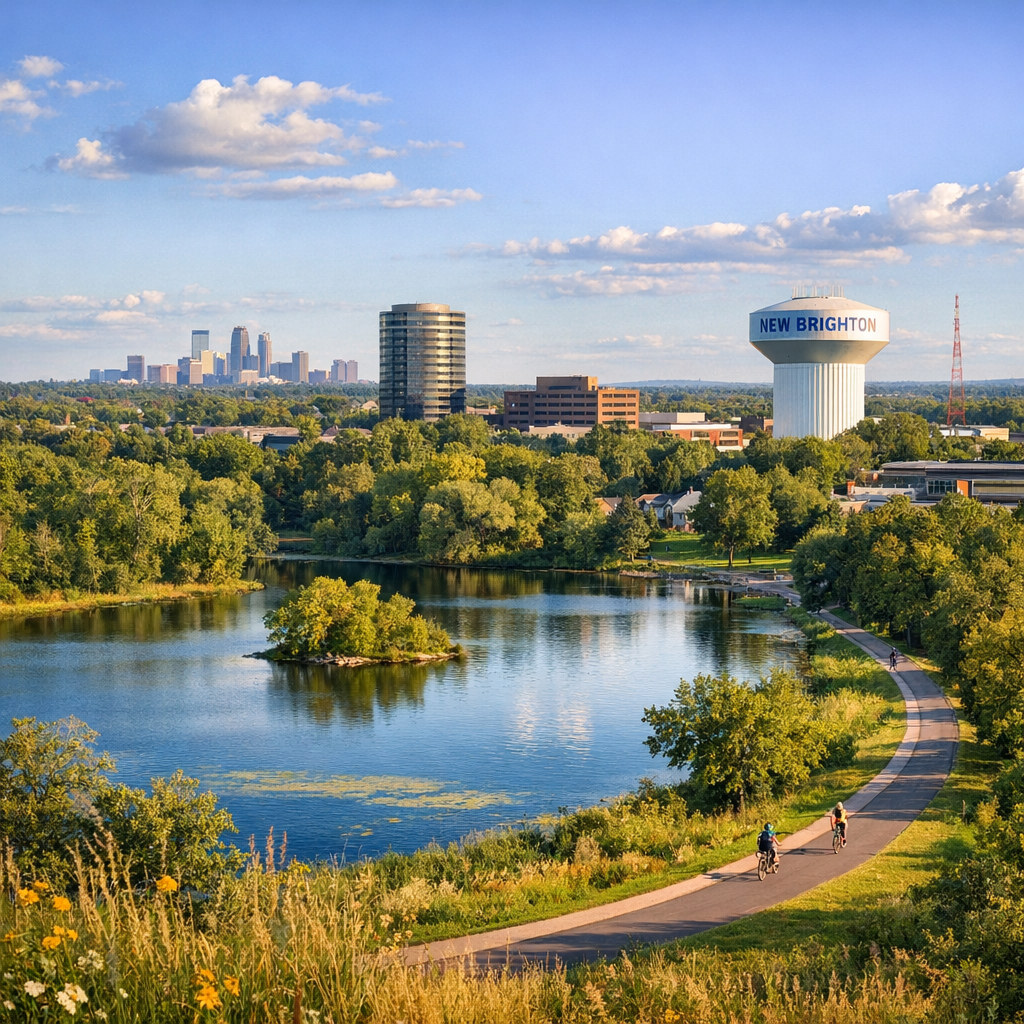
New Brighton, Minnesota, experiences a humid continental climate characterized by cold winters and warm summers. Average temperatures range from lows of 7.2°F in January to highs of 82.8°F in July. Annual precipitation averages 33.78 inches, with May and June being the wettest months.
In response to environmental challenges, New Brighton has implemented several initiatives. The city’s Climate Action Plan, approved in January 2024, addresses areas such as transportation, waste management, and green spaces to build resilience against climate change.
Water quality has been a focal point due to historical contamination from the Twin Cities Army Ammunition Plant. The city has established a state-of-the-art water treatment facility to ensure safe drinking water and continues to monitor for emerging contaminants like 1,4-dioxane.
Stormwater management is also a priority. New Brighton is entirely within the Rice Creek Watershed District, and the city has designed drainage systems to mitigate flooding risks associated with urban development and impervious surfaces.
Residents are encouraged to participate in programs like Adopt-a-Drain to help keep local waterways clean. By staying informed and engaged, the community can contribute to New Brighton’s ongoing environmental stewardship.