
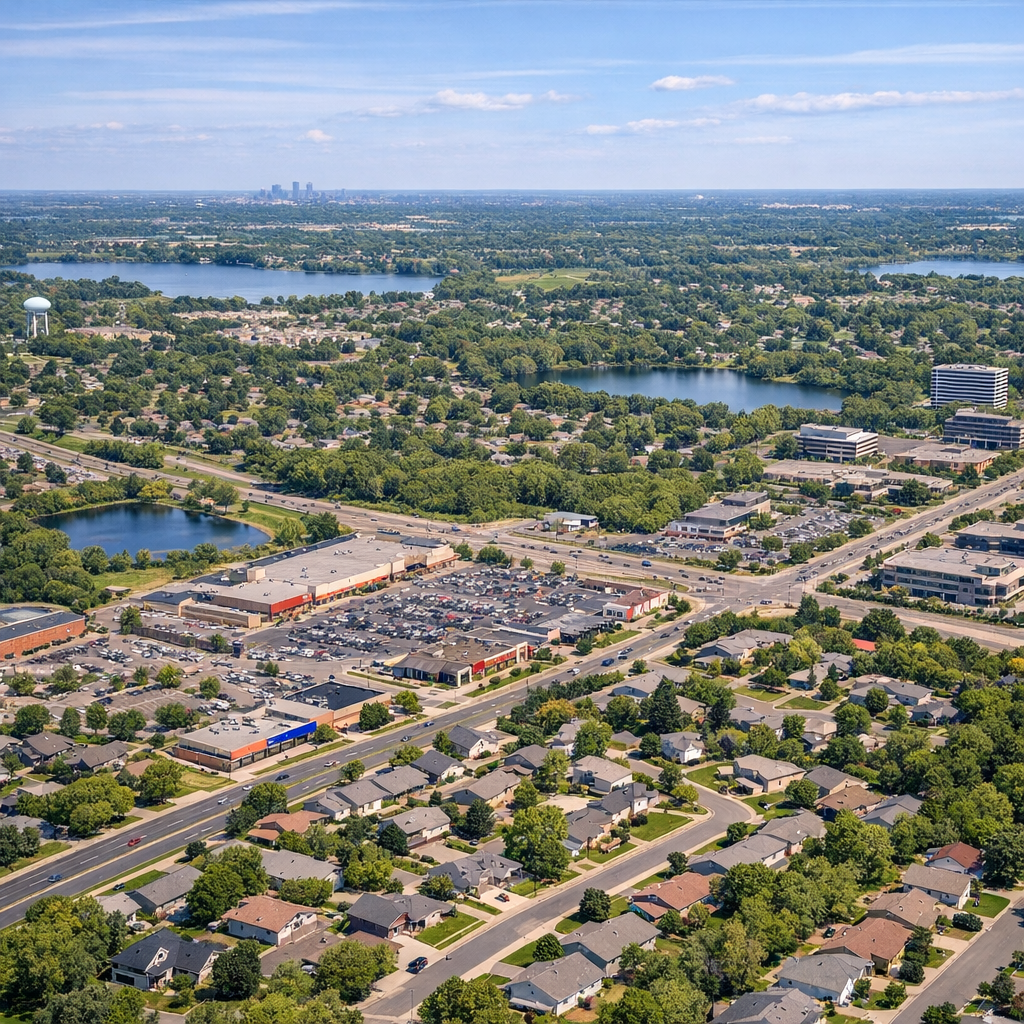
New Brighton, Minnesota, continues to experience dynamic economic developments, reflecting broader regional trends. This article provides an overview of the city’s current economic landscape, housing market, and business environment.
Economic Overview
As of 2024, New Brighton’s population stands at approximately 22,710 residents. The city’s economy employs around 12,000 individuals, with key industries including health care and social assistance, manufacturing, and professional, scientific, and technical services. Notably, the professional, scientific, and technical services sector offers the highest average annual salary of $111,154.
Housing Market Trends
The housing market in New Brighton has shown resilience and growth. In March 2026, the median sale price of homes reached $407,000, marking a 3.6% increase from the previous year. Homes are selling faster, with an average of 13 days on the market compared to 23 days last year. Additionally, the median sale price per square foot has risen to $199, reflecting a 7.6% year-over-year increase.
Business Environment
New Brighton’s strategic location near major highways like I-35W and I-694 enhances its appeal for businesses. The city hosts several industrial parks, supporting a diverse range of industries. The Department of Community Assets and Development (DCAD) actively promotes economic growth by connecting businesses with resources such as the ‘Open to Business’ program, which offers assistance in areas like financing, business planning, and regulatory compliance.
Despite these positive indicators, businesses in the broader Ninth District, which includes Minnesota, have faced challenges due to economic uncertainties. A survey by the Federal Reserve Bank of Minneapolis revealed that nearly half of the respondents reported declines in revenues, and over half experienced profit reductions. Factors such as increased input costs and fluctuating customer demand have contributed to these challenges.
Conclusion
New Brighton’s economic landscape is characterized by a robust housing market and a supportive business environment. However, businesses must navigate ongoing economic uncertainties. Staying informed and leveraging available resources will be crucial for continued growth and stability in the community.